Recognise the concern
We discuss where staff might encounter a sharp or potentially contaminated material, who else uses that space and when the activity needs to stop.
A street-cleansing operative spots a discarded needle beside a public bin. Who do they call, what do they report, and who takes responsibility next? We use situations like this to help crews and supervisors talk through your own procedure.
Discuss training for your crews
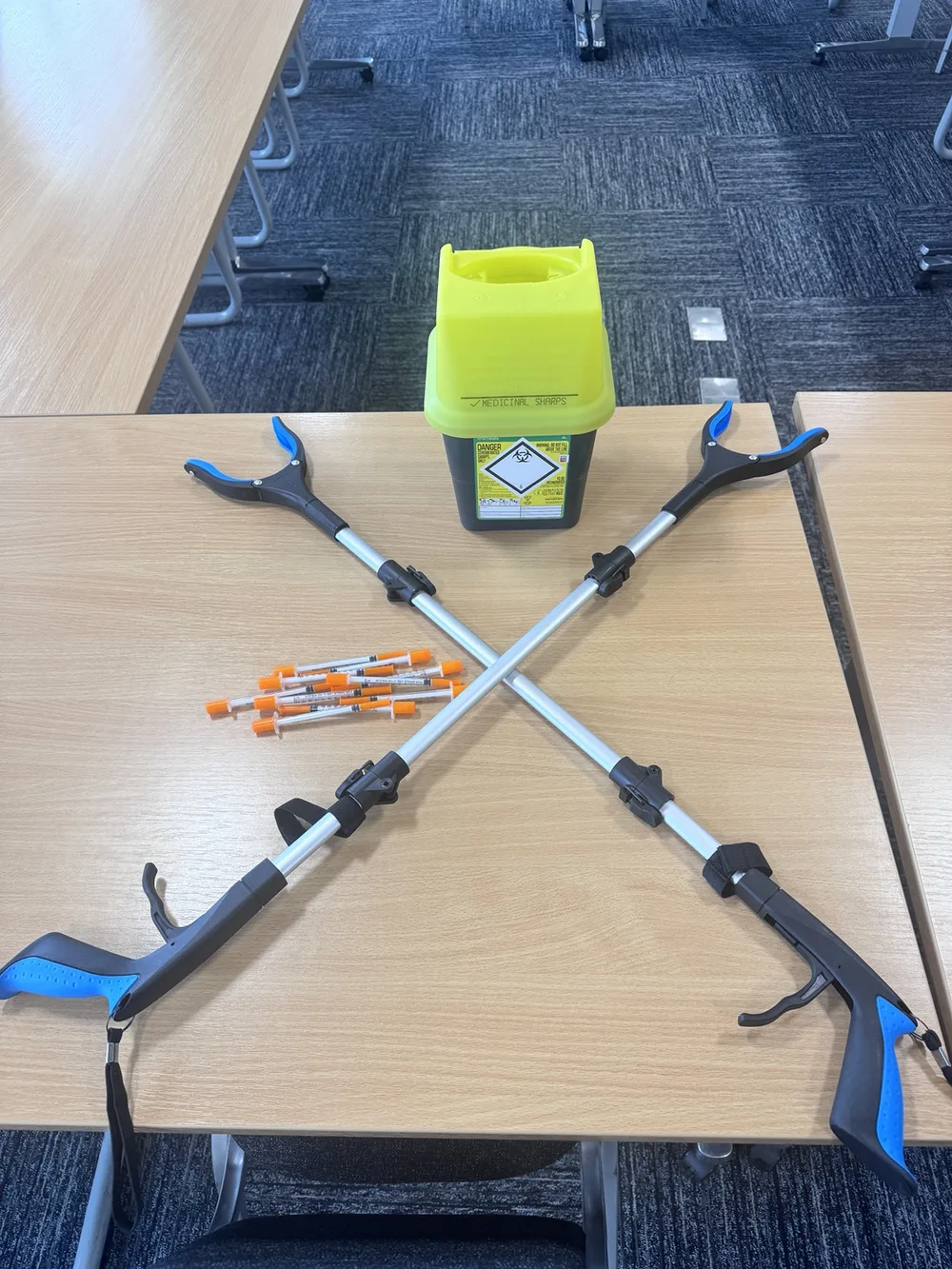
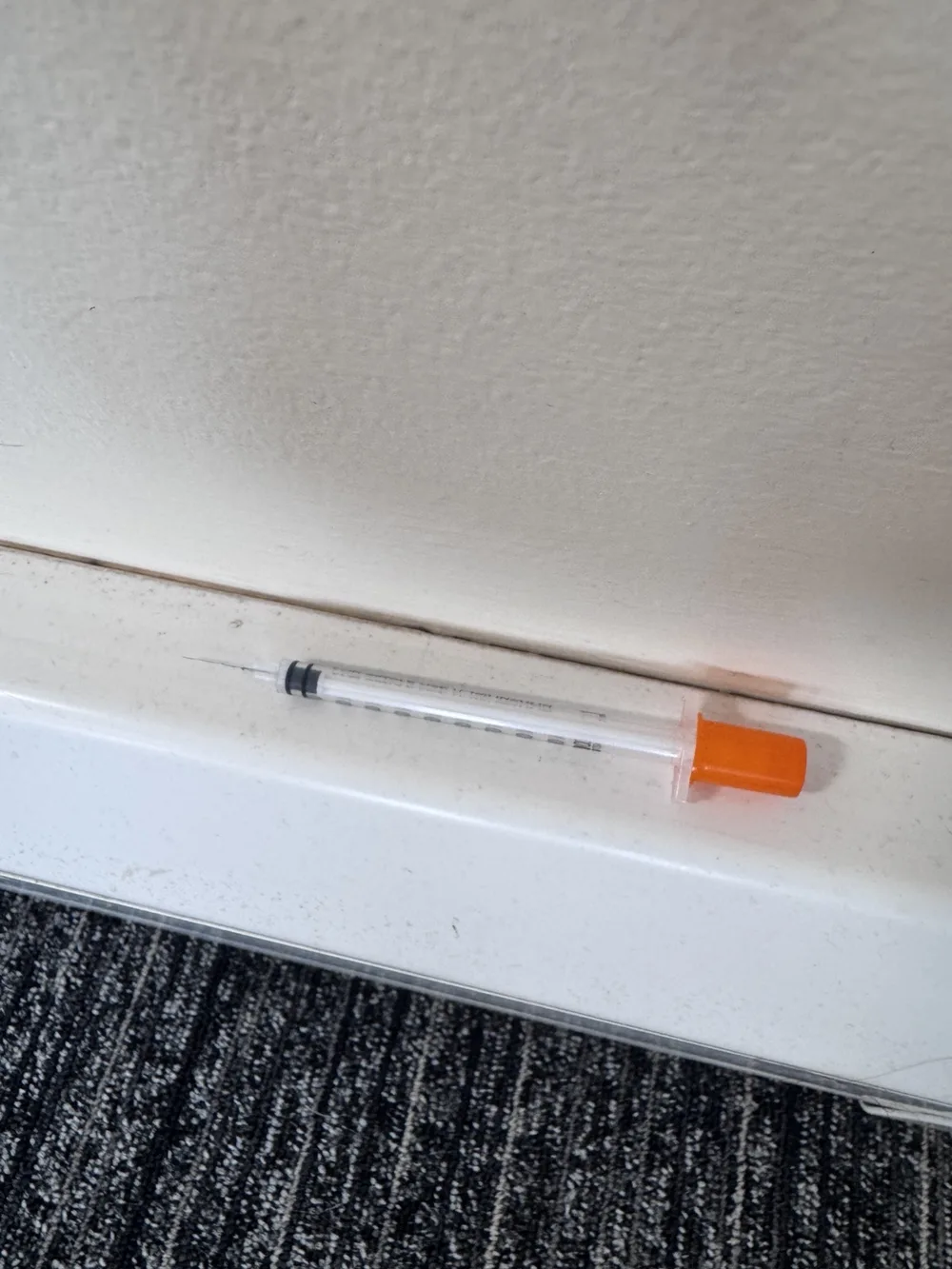
Street-cleansing and waste crews may come across discarded sharps on a round. A housing caretaker might find one in a communal stairwell. Supervisors may be the people who receive the first call. We agree which of those roles are in the room so each group can practise the decisions it actually makes.

We use real sharps in our training so crews can see how easily a needle can go unnoticed. Using examples like this one, we talk through what to do and who to contact if they find a sharp at work.
We discuss where staff might encounter a sharp or potentially contaminated material, who else uses that space and when the activity needs to stop.
Using your local procedure, the group works through who to contact and what details would help the person receiving the report locate the hazard.
We ask who is authorised to respond, how the crew knows the report has been received, and which reporting and support arrangements apply if someone may have been exposed.
We’ve delivered Sharps and Biohazards Awareness for a council in the West Midlands using morning and afternoon groups. If you can only release one crew at a time, tell us when they leave and return to the depot. We’ll agree the session times, group sizes and site arrangements with you.
Tell us which service is attending, the situations staff encounter, and who normally receives their reports. If you have a reporting procedure you want us to use, we can review it with you before the session.
Plan Sharps and Biohazards training